Rituals as key elements of organizational culture

Discours de fin d’année, bilan et perspectives
When organizations pause at the end of the year—for a celebration, an annual general meeting, or a collective review—much more than a formal conclusion is taking place. These year-end rituals are powerful tools for organizational culture. They mark transitions, channel emotions, and create a sense of collective purpose. From the perspective of organizational research, these rituals are not a marginal phenomenon. They illustrate the close interaction between rituals and organizational culture—a link that has been studied scientifically for decades.
Rituals and organizational culture: culture becomes tangible
Organizational culture is not primarily revealed in mission statements or strategic documents, but in everyday life. Research in organizational and cultural sociology shows that rituals are one of the most effective ways to make culture visible and tangible because they
- condense values into actions,
- create recognizable patterns, and
- provide a frame of reference within complex systems.
Year-end rituals particularly amplify this effect. They reveal—often implicitly—an organization’s values: How does it define success? How does it manage performance, mistakes, or recognition? This is precisely where organizational culture manifests and puts itself on display.
Rituals are universal—but culturally diverse
Rituals as a universal human phenomenon
Scientific research shows that rituals exist in all cultures and social systems. They serve to structure time, create social bonds, and mark transitions. Organizations are no exception. This universality explains why rituals have such a powerful impact, even in modern and rationally shaped companies, regardless of the sector of activity or hierarchy.
Intercultural Rituals: Same Function, Different Forms
Rituals are shaped by culture. Intercultural research shows that while rituals may have a similar function, their design differs considerably among national cultures. In individualistic cultures, personal achievement and recognition are paramount.
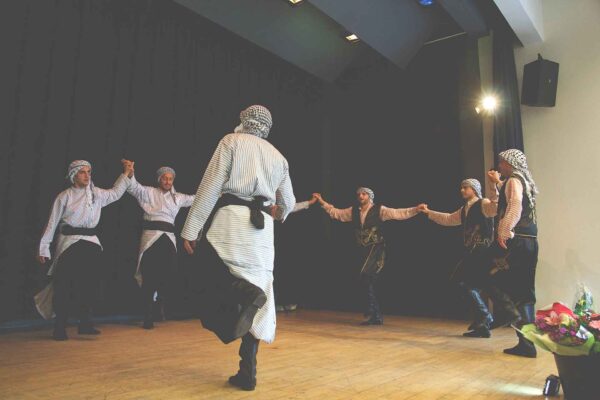
La danse rituelle traditionnelle comme expression de la culture
- In collectivist contexts, community, harmony, and teamwork are paramount.
Hierarchical cultures favor formalized rituals, while more egalitarian cultures prefer informal and participatory forms. - For international organizations, this means that intercultural rituals must be culturally compatible to be effective. High-performing companies use rituals as a bridge between global values and local meanings.
Rituals and identification: why do people feel connected to the company?
A major finding in organizational research concerns the link between rituals and identification. Empirical studies show that employees identify more strongly with their organization when they regularly participate in meaningful rituals. Rituals foster identification because they:
- make belonging an emotional experience,
- place individual contributions within a broader context,
- and highlight collective achievements.
End-of-year ceremonies are particularly effective in this regard. They combine reflection, recognition, and future planning, creating emotional anchors that last well beyond the event itself.
Their effect is not always visible, but it is effective.
As a team development tool
Rituals play a central role in team development. Research in organizational psychology shows that teams that share rituals:
- build trust more quickly,
- define social roles more clearly,
- and are more resilient to change.

Manger ensemble favorise la cohésion d’équipe.
They structure collaboration without formalizing it. Recurring rituals, such as joint year-end reviews, retrospectives, or symbolic milestones, strengthen team cohesion and foster lasting cooperation. Within hybrid or distributed teams, these ritualized moments take on increased importance, as they consciously create a stronger social bond.
As a strategic human resource management tool
Modern organizational research no longer considers rituals as mere cultural accessories, but as strategic elements. They can serve to:
- support cultural development,
- accompany change processes
- strengthen identification and commitment,
- and promote sustainable team development.
Year-end rituals, in particular, offer considerable potential, as they capture significant attention and are experienced with great sincerity.
Conclusion: Rituals are effective when consciously cultivated
Rituals are universal social tools whose effectiveness has been demonstrated in numerous cultures. Their strength lies in their ability to create meaning, foster identification, and stabilize collaboration, provided they are adapted to the cultural context.
The interaction between rituals and organizational culture, their importance for identification, their role in team development, and their intercultural adaptability make them one of the most effective, yet often underestimated, tools of organizational culture. End-of-year rituals are no exception. They are more than just a pleasant conclusion: they represent a strategic moment for cultural consolidation.
Learn more
For in-depth analyses on team development, intercultural learning, personal development and resilience, please see our Intercultural Services page and our Cross-Cultural Compass on our website.