1. Introduction
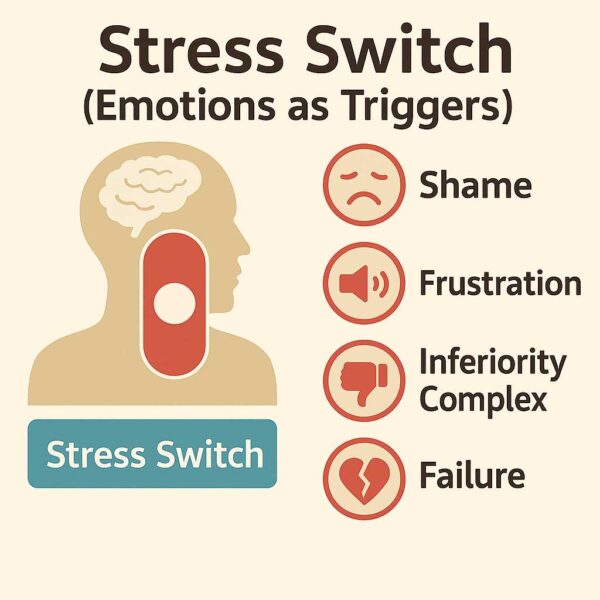
Stress is present in almost every moment in which we feel frustrated and vulnerable. But the fear of being judged by others is also a common stressor. But how exactly does our body react in such situations? A new US study now makes it clear: There is no single typical stress response. Rather, each person carries their own cortisol profile – a kind of biological program for how the body reacts to social stress. And the surprising thing is: It’s not just external stress that determines our stress level, but above all our inner feelings. When someone feels ashamed, observed, or criticized, a powerful switch is activated in the body. This triggers the release of the so-called stress hormone cortisol [1].
2. Cortisol – The alarm bell of our body
The hormone cortisol is the end product of a biological process that begins in our brain. There, in the hypothalamus [2], a signal is transmitted to the pituitary gland [2] when a threat is perceived – the–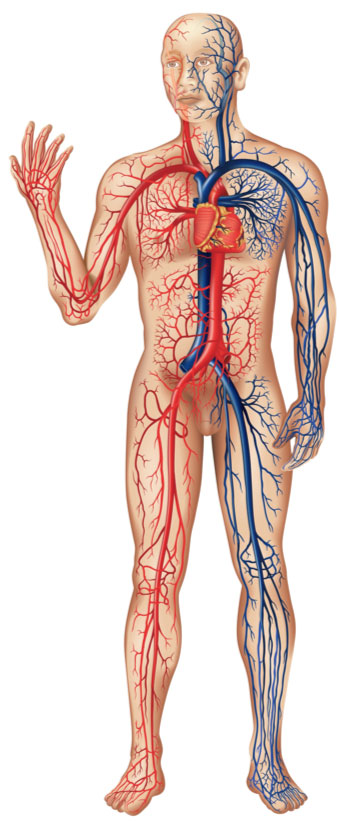 die wiederum die Nebennieren dazu anregt, Cortisol auszuschütten.
But when is cortisol permanently harmful? Cortisol is actually extremely important for the body. It provides energy, increases blood sugar levels, temporarily suppresses the immune system (to mobilize sufficient energy), and prepares us for fight or flight. In small doses, cortisol can even have a motivating effect. But if levels remain permanently high or repeatedly rise sharply, it can make us ill – for example, increasing the risk of cardiovascular disease, depression, or sleep problems.
Typical for acute stress is that the cortisol level rises sharply after about 20 to 30 minutes and then slowly decreases again – when the threat is over. This is precisely the pattern the researchers observed in participants who felt strongly evaluated.
3. How evaluation, insecurity & shame control cortisol levels
3.1 Procedure of the scientific study
In the study, over 1,200 adults were placed in laboratory situations in which they had to solve tasks under observation. For example, they had to give a speech or do math problems, sometimes in front of a neutral jury and sometimes in front of a negative jury. This assessment situation triggered severe stress in many of them. Cortisol levels were measured in their saliva several times. The results showed that there are five different reaction patterns to such social stressors. The majority of participants had hardly any measurable reaction. Their cortisol remained low or even fell. Others showed mild or moderate reactions. And a smaller group of people – around 9 percent – reacted with a veritable hormonal surge. Their cortisol levels rose by over 130%. This group felt the most observed and therefore most frequently reported feelings of shame.
Particularly intriguing: There were also individuals who highly felt being evaluated, but whose bodies showed no significant cortisol response. These weakened responses are now also considered potentially harmful to health, as they may indicate an unhealthy suppression of the stress system.
3.2 The five stress types at a glance
The study, in which more than 1,200 people were tested in stressful situations, discovered five typical cortisol profiles, namely:
- No measurable reaction
► Cortisol remains low or decreases
► Effect: seemingly calm, possibly a protective mechanism - Slight cortisol increase
► Moderate reaction to social stress
► Effect: healthy, normal adaptation - High initial level that slowly decreases
► Body appears permanently in heightened alertness
► Effect: chronic underlying tension possible - Severe cortisol surge
► Over 130% increase
► Effect: intense stress reaction, often with shame and evaluation anxiety - Permanently high cortisol level
► No return to resting state
► Effect: critical to health, chronic stress3.1. The real stress switch is in the head – and is called emotion
What is particularly striking about the study results is that the most intense reactions were not experienced by those who were objectively most stressed, but by those who felt the most internally ashamed or negatively judged. The autonomic nervous system makes lightning-fast decisions in every situation. If the situation is classified as unpleasant or dangerous, it goes into alarm mode (sympathetic nervous system). This applies to soldiers in war, students taking exams, or tennis players panicking during a match. If, on the other hand, the situation is perceived as pleasant, the system goes into calm mode (parasympathetic nervous system). This short video explains how the sympathetic and parasympathetic nervous systems work. Emotions such as shame, fear, frustration, or insecurity act like a turbo amplifier. They activate the cortisol system – sometimes even when there is objectively no concrete danger. It becomes particularly dangerous when this activation occurs frequently – without sufficient recovery. The different stress reactions of the test subjects were categorized as follows based on their respective cortisol levels.
4. What does this mean for you?
Knowing your cortisol profile can be key to becoming more conscious in how you deal with stress.
Ask yourself:
In which situations do you quickly feel observed or ashamed?
How does your body react in such moments?
Does your stress level skyrocket? Or do you remain surprisingly calm – perhaps too calm?
Both can provide clues: A highly reactive stress system needs targeted relaxation. A barely reactive system can be a sign that your body has already switched to a kind of protective mode – which can also be stressful in the long run.
4.1 Mindfulness Promotes Your Resilience…
Instead of seeing stress solely as a reaction to external demands, it becomes clear: It is primarily your internal evaluations – feelings like shame, insecurity, or fear of rejection – that activate the stress system. The good news is that such reaction patterns can be changed. If you recognize which situations typically trigger your inner alarm, you can counteract them more specifically. Various methods are available to you here: mindfulness, breathing exercises, mental training, meditation, or even new, self-caring ways of thinking. The key is to be able to focus on your emotions without judging them, but rather accepting them for the time being as they are. This type of awareness of your inner, mental processes and the shift to a different perspective are precisely the goals of the training sessions mentioned.
 4.2 …And targeted training makes you strong
At the same time, knowing your cortisol profile invites you to be gentler with yourself. Perhaps your body barely reacts—not because you’re so “cool,” but because your system is overloaded and shutting itself down. Or you react very strongly—which isn’t a sign of weakness, but of high sensitivity. Both are okay. The key is to get to know yourself better. Because the more you understand how your body reacts to social stress, the better you can protect yourself, regulate yourself—and live a healthier life in the long run.
In our course “Calm and Confident in Stress” you will learn, among other things, how to confidently deal with shame, pressure and judgment – and really calm your nervous system.
[1] Brain structure that controls various processes such as eating, sleeping and sexuality.
[2] In English, the pituitary gland. It sits beneath the hypothalamus and plays a central role in the activation of hormones such as cortisol, adrenaline, and noradrenaline.
Author: Noureddine Yous, intermedio.ch
Zurich, 02. Juni 2025