Intercultural communication Japan
Working with Japanese teams: understanding cultural codes
Working with Japanese teams means operating within a Japanese business culture based on respect, harmony, and collective decision-making. Communication in Japan is often indirect, non-verbal, and heavily focused on consensus processes. Understanding these cultural codes allows for more effective collaboration with teams and partners in Japan and helps prevent misunderstandings.

The 2 Most Frequent Intercultural Mistakes When Working with Japanese Teams

Attitudes and Norms
Always act as a team member
Japanese see themselves primarily as part of a whole. As individuals, they take a back seat.
Hierarchy and leadership
Loyalty and respect for superiors is the rule for employees. Open criticism leads to a loss of face for the criticized and is generally avoided.
Communication style
The Japanese always seek harmony and consensus. A direct “no” is hardly said.
Hints for Team-Leaders by Culture Compass Japan
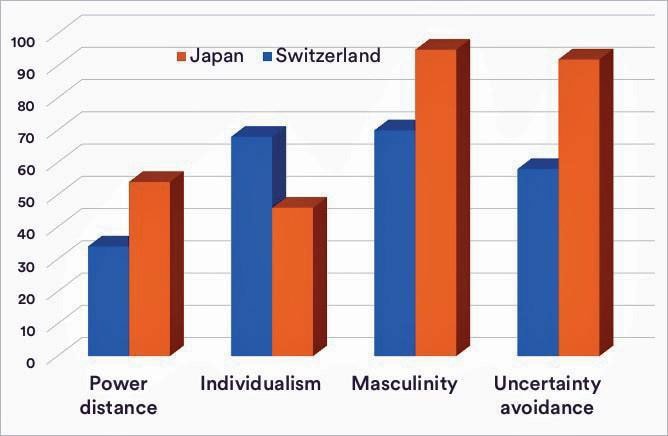
The advantage of the constant search for consensus is that decisions are subsequently widely supported by the employees. Exercising patience is therefore advisable. Important decisions are not made without consulting all the people involved. However, once they enjoy a wide support, the delay is made up. If someone wants to push through a suggestion, informal persuasion must be carried out in addition to the formal route (lobbying). For the Japanese, status orientation means that everyone has their own place in the hierarchy. The hierarchy should be observed by everyone. It is therefore advisable to keep a certain distance when dealing with employees.

Cultural Dimensions (according to Hofstede)